Watching the Watchers: Security Cameras in Residential Real Estate — Balancing Protection and Privacy

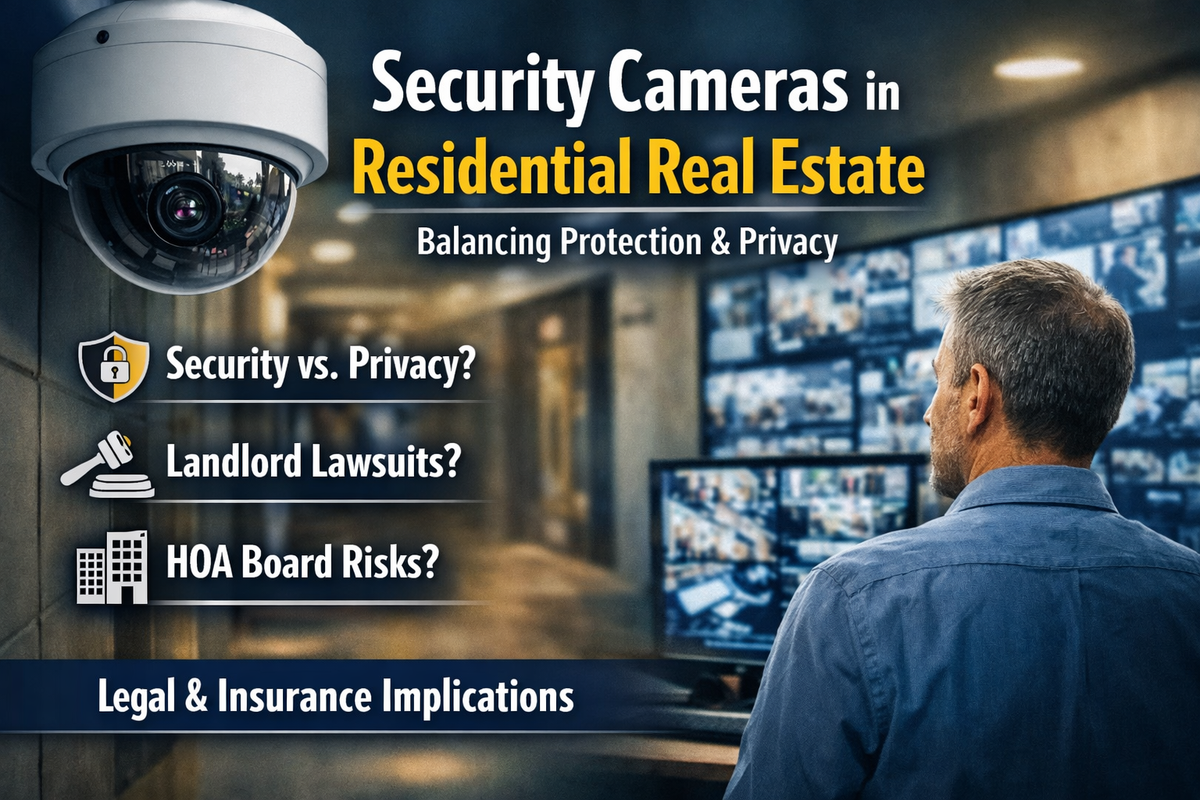
Security cameras are becoming standard in residential real estate. From garden-style apartment communities to high-rise condominium towers, owners and HOA boards are increasingly turning to video surveillance to deter crime, document incidents, and protect residents and property. In many markets, cameras are no longer viewed as a luxury upgrade but as a baseline expectation.
Yet every camera installed introduces a tension between security and privacy. For landlords and HOA boards, the real question is not simply whether cameras should be installed, but how they are implemented, governed, and insured.
The motivation behind surveillance systems is understandable. Cameras can deter theft and vandalism, reduce package theft in mailrooms, monitor garage access, and document slip-and-fall incidents or altercations. In dense residential environments, particularly in urban areas, these systems are often seen as part of a comprehensive risk management strategy.
However, once cameras are installed, expectations change. Residents may assume that footage is being actively monitored, that dangerous behavior will be detected in real time, or that the presence of cameras guarantees their safety. When those expectations are not met, liability can follow.
The placement of cameras is one of the first major privacy considerations. Most jurisdictions permit surveillance in common areas such as building entrances, lobbies, hallways, elevators, parking garages, and mailrooms. These spaces generally do not carry a reasonable expectation of privacy. Problems arise, however, when cameras capture footage inside private units through open doors, record areas such as balconies that feel personal, or record audio in states that require all-party consent. Surveillance that feels excessive, discriminatory, or intrusive can quickly shift from a security measure to a legal exposure.
For landlords, one common legal risk involves a tenant alleging negligent security. Imagine a tenant assaulted in a parking garage where cameras had been installed. If the cameras were poorly positioned, malfunctioning, or never monitored, the tenant may argue that the landlord created a false sense of security. The claim may assert that the property owner failed to maintain the system or relied on it without ensuring it actually worked. What began as a security enhancement can become the foundation of a premises liability lawsuit.
Privacy claims can also arise. A tenant might allege that surveillance intruded into semi-private spaces, that audio was recorded without proper disclosure, or that footage was improperly shared. In those cases, the dispute shifts from bodily injury to invasion of privacy.
From an insurance standpoint, several policies may apply. A Commercial General Liability policy may respond to bodily injury allegations tied to negligent security. Personal and advertising injury coverage in the liability form may address certain invasion-of-privacy claims. An umbrella or excess liability policy could provide additional limits if damages escalate. If footage is hacked, improperly accessed, or leaked, a cyber liability policy may be triggered, particularly if cloud storage or remote access is involved. Without careful policy review, however, privacy-related allegations can fall into gray areas, especially when intentional conduct or improper disclosure is alleged.
In condominium communities, surveillance introduces another layer of exposure because the HOA board acts in a fiduciary capacity. If a board installs cameras without proper authority under the governing documents, fails to obtain required membership approval, or implements surveillance in a way that appears selective or discriminatory, a unit owner may file suit alleging breach of fiduciary duty. The dispute may not center on whether cameras improve safety, but whether the board acted within its authority and in the best interests of the association.
These claims often implicate Directors and Officers liability insurance. D&O coverage is designed to respond to allegations of mismanagement, breach of fiduciary duty, improper rule enforcement, or failure to follow governing documents. If a board neglects to adopt a written surveillance policy, mishandles access to footage, or fails to address privacy concerns raised by members, the claim may fall squarely within the governance realm rather than general liability. Cyber liability coverage may also become relevant if stored footage is compromised in a data breach.
Modern surveillance systems further complicate the risk landscape. Many platforms store footage in the cloud, allow remote access by board members or property managers, and integrate with access control systems that track entry and exit data. The collection and retention of this data create an entirely new category of risk. A breach may require resident notification, trigger regulatory scrutiny, and expose the association or landlord to reputational harm in addition to financial loss.
Balancing security and privacy requires more than installing hardware. It requires a thoughtful governance framework. Residential property owners and HOA boards should adopt clear surveillance policies that define camera locations, disclosure practices, access to footage, retention timelines, and lawful use. Installation decisions should align with governing documents, and insurance policies should be reviewed to confirm that negligent security, invasion of privacy, cyber breach, and fiduciary duty claims are adequately contemplated.
Security cameras can absolutely reduce crime and strengthen a property’s safety posture. They can provide valuable documentation and may even deter misconduct simply by their presence. But every lens also captures potential liability. Installing cameras without considering privacy implications, governance authority, and insurance structure can transform a protective measure into a legal exposure.
In today’s residential environment, surveillance should be treated as a holistic risk management decision. The most prudent landlords and HOA boards understand that protecting their communities requires not only physical security but also careful alignment between policy, privacy, and insurance before the first camera is mounted.