
The Smartest Way to Stop a Million-Dollar Claim: Why Every High-Rise Building Should Install Water Sensors

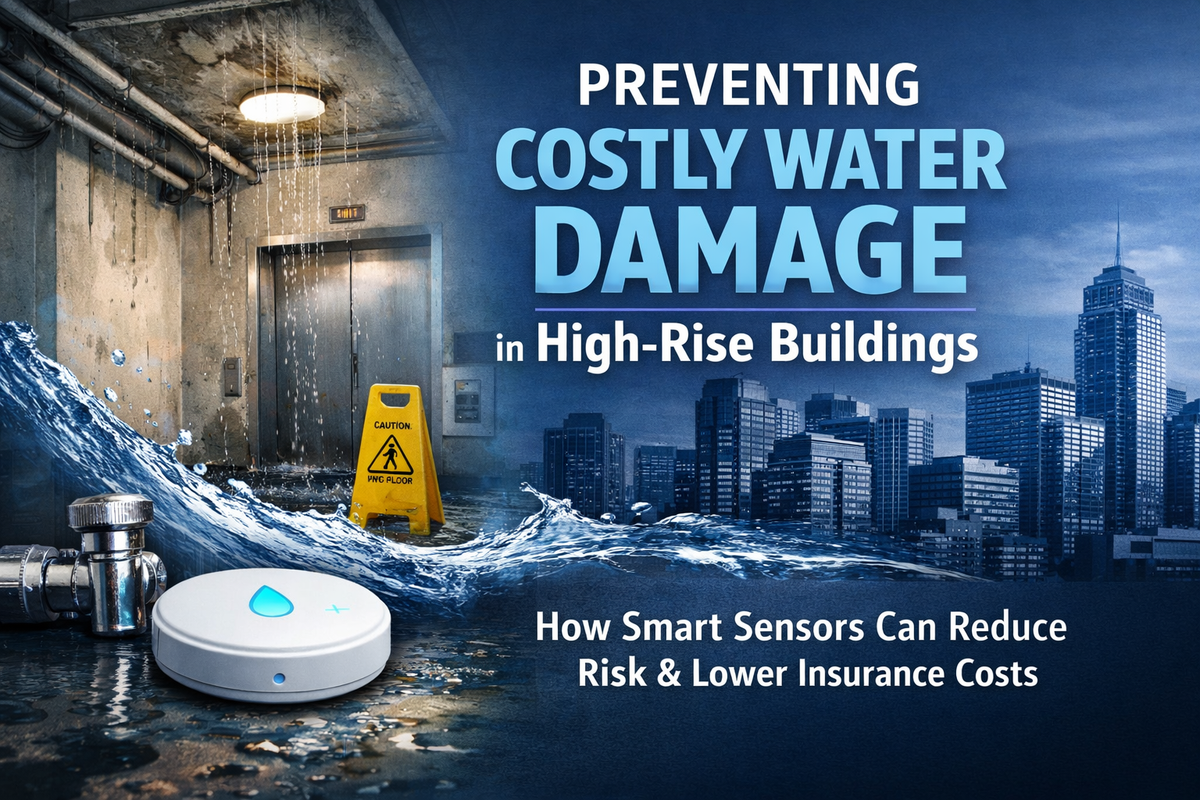
In high-rise buildings, water doesn’t simply leak — it travels.
It moves vertically through plumbing chases, horizontally across ceilings, down elevator shafts, and into electrical rooms before anyone realizes there is a problem. Whether the property is a condominium association, a multifamily rental, an office tower, a mixed-use development, or a historic landmark, water damage remains one of the most frequent and costly drivers of insurance claims.
The real issue is not that pipes fail. They always have, and they always will. The issue is how long it takes for someone to discover the failure.
In a high-rise building, a small supply line break in a single unit can affect multiple floors within hours. Pressure variations, stacked plumbing systems, and shared risers mean that a seemingly minor incident can escalate quickly. In many cases, a simple $20 component failure behind a sink turns into a six-figure claim because no one knew about it for 12 or 24 hours. By the time water stains appear on a ceiling below, damage has already spread through insulation, framing, flooring, cabinetry, and sometimes electrical systems.
Water detection technology changes that equation entirely.
Modern water sensor systems range from simple point-of-leak devices to fully integrated building-wide monitoring systems tied into a building management platform. When moisture is detected, alerts are sent immediately to management or maintenance personnel. More advanced systems can automatically shut off the water supply to prevent ongoing flow. Instead of discovering damage the next morning or after a weekend, the building team can respond within minutes.
That time difference is everything.
The purpose of water sensors is not to eliminate leaks. That would be unrealistic. The goal is to reduce severity. Shortening the detection window dramatically limits how far water can travel, how much material must be replaced, and how disruptive the event becomes. In high-rise HOAs, this means fewer disputes between unit owners and the association over who is responsible. In multifamily rental buildings, it reduces tenant displacement, vacancy loss, and repair timelines that impact net operating income. In office buildings, it protects tenant improvements, minimizes business interruption, and avoids reputational damage. In historic high-rises, it safeguards materials and craftsmanship that cannot easily be replicated or replaced at standard construction cost.
Insurance carriers are paying close attention to this type of mitigation. Water damage remains one of the most common claim categories in habitational and mixed-use properties. Insurers are far more concerned about large, multi-floor losses than small maintenance issues. A system that detects a leak quickly — and, in some cases, automatically shuts off the water — can be the difference between a minor repair and a catastrophic claim.
From an underwriting standpoint, buildings that implement proactive mitigation measures present differently. When ownership or an HOA board can demonstrate installation documentation, monitoring protocols, and automatic shutoff capabilities, it strengthens the underwriting narrative. It signals active governance and risk awareness rather than reactive maintenance. In competitive markets, that distinction matters. While no carrier guarantees premium reductions, buildings with strong water mitigation strategies may avoid higher deductibles, negotiate more favorable renewal terms, and maintain broader market access over time.
The financial comparison is straightforward. The cost of installing a comprehensive water-detection system is typically a fraction of a single major claim. Yet a single severe water loss can trigger premium increases for several years, higher deductibles, tighter terms, and, in some cases, litigation among owners, tenants, and associations. The indirect costs — lost rental income, reserve depletion, special assessments, legal fees, and management distraction — often exceed the insured portion of the loss.
For HOA boards and institutional owners alike, the decision to install water sensors is not merely a maintenance upgrade. It is a governance decision. It reflects fiduciary responsibility and long-term asset stewardship. In today’s insurance environment, particularly in high-rise properties in markets like California, carriers are increasingly selective. Demonstrating proactive loss control can materially influence how a building is viewed during renewal negotiations.
Water will always follow gravity. That reality cannot be changed.
What can be changed is how quickly a building becomes aware of a problem. Water sensors transform an unseen overnight catastrophe into a manageable maintenance event. In a vertical environment where small failures can cascade through multiple floors, that difference can protect not only physical property, but also financial stability, reserve health, and long-term insurability.
In a high-rise building, early detection is not a luxury. It is one of the most practical and cost-effective risk management tools available today.