Steps to Take After a Water Loss in a High-Rise HOA

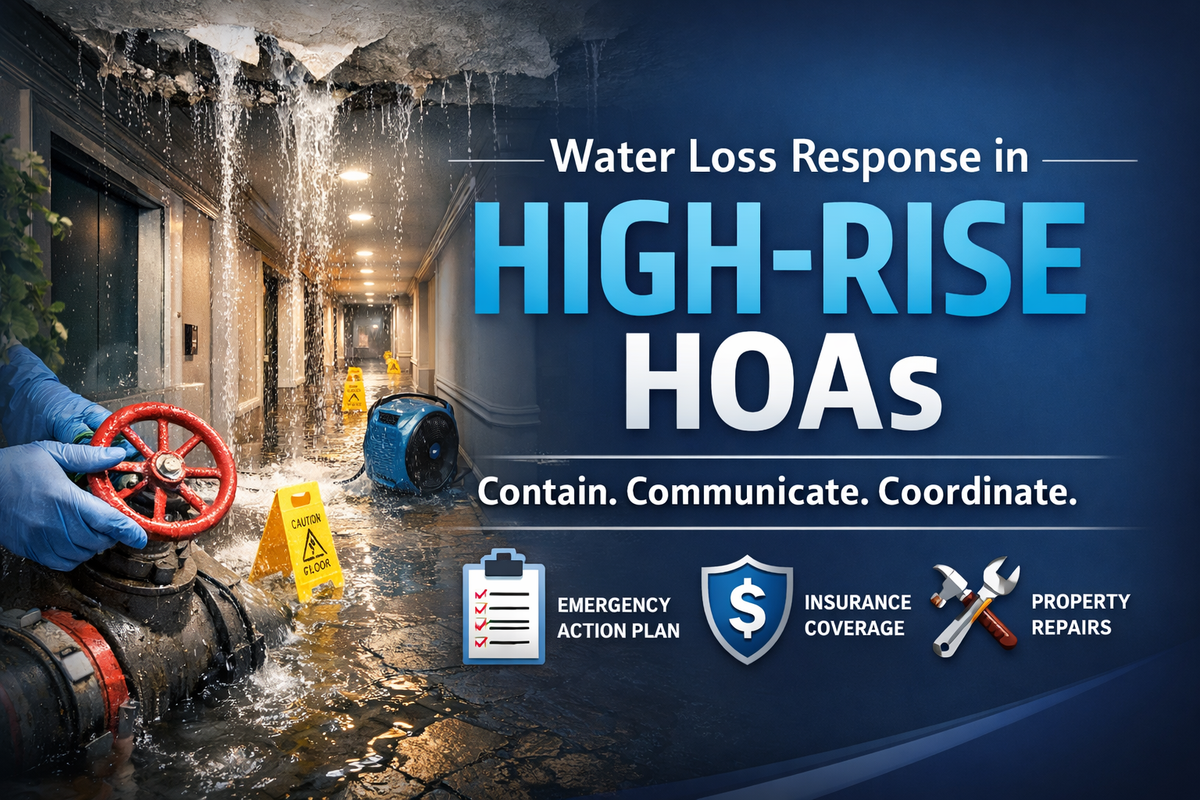
Water losses are the most common—and most disruptive—claims faced by high-rise HOAs. A single failed supply line, overflowing tub, or broken HVAC component can impact multiple units, common areas, elevators, and critical building systems within minutes. How an HOA responds in the first 24–72 hours can significantly affect repair costs, insurance recovery, resident satisfaction, and future claim outcomes. This guide outlines a clear, step-by-step response framework for boards, property managers, and building staff after a water loss.
1. Prioritize Safety and Stop the Source
The first objective is containment.
Immediate actions:
- Identify and shut off the water source (unit valve, riser, domestic line, HVAC condensate, fire sprinkler impairment).
- If electrical systems are affected, secure power to impacted areas.
- Restrict access to unsafe areas (wet corridors, ceilings at risk of collapse).
- Document the time discovered, units affected, and suspected source.
In high-rise buildings, delays of even minutes can exponentially increase vertical damage.


2. Notify Property Management and the HOA’s Emergency Vendors
Once the source is controlled, escalation should be immediate.
Key notifications:
- Property manager / on-site engineer.
- Pre-approved water mitigation vendor.
- Building security or front desk (if applicable).
Mitigation should begin before the fault is determined. Drying and stabilization are about preventing further damage—not assigning responsibility.
3. Document Everything from the Start
Thorough documentation protects the HOA, supports insurance recovery, and reduces disputes.
Best practices:
- Take timestamped photos and videos of:
- Source area.
- All impacted units.
- Common areas.
- Mechanical and plumbing components.
- Maintain a running incident log.
- Preserve failed components (do not discard valves, hoses, fittings).
Poor documentation is one of the top reasons HOAs struggle with claim reimbursement and owner disputes.
4. Determine HOA vs. Unit Owner Responsibility
High-rise water losses often lead to confusion about who pays for what.
Next steps:
- Review the CC&Rs, insurance provisions, and maintenance matrices.
- Identify:
- HOA responsibility (common piping, structural elements, standard finishes).
- Unit owner responsibility (betterments, personal property, upgrades).
- Avoid premature conclusions—responsibility may differ by location, cause, and building documents.
This step is critical before making coverage representations to residents.
5. Notify Insurance Carriers Strategically
Not every water loss should automatically become a claim—but late notice can be damaging.
Coordinate with:
- The HOA’s insurance broker.
- Property manager.
- Legal counsel (for large or multi-unit losses).
Key considerations:
- Number of units affected.
- Estimated total cost (including mitigation + rebuild).
- Deductible allocation provisions.
- Potential subrogation against responsible parties.
Early broker involvement helps prevent deductible disputes, coverage gaps, and claim misclassification.
6. Communicate Clearly with Residents
Water losses create stress, frustration, and misinformation.
Effective HOA communication includes:
- A building-wide notice acknowledging the incident.
- What is known vs. still under investigation.
- Who the unit-owners should contact.
- Guidance on unit access and personal insurance (HO-6 policies).
- Clear expectations on timelines.
Transparency reduces escalation, complaints, and legal exposure.
7. Coordinate Repairs and Restoration
After drying and stabilization:
- Engage approved contractors for scope development.
- Separate mitigation invoices from rebuild invoices.
- Track costs by:
- Unit.
- Common area.
- Cause of loss.
Avoid rushing permanent repairs until moisture readings confirm proper drying—especially in stacked construction.
8. Conduct a Post-Loss Review and Risk Mitigation
Once the immediate crisis is resolved, the most valuable step begins.
Post-loss best practices:
- Identify root cause (aging supply lines, failed fittings, maintenance gaps).
- Update inspection and maintenance protocols.
- Consider leak-detection systems or automatic shutoff valves.
- Review deductible allocation and water damage policies.
- Educate residents on reporting and prevention.
The strongest HOAs treat water losses as data points, not just claims.
Final Thought
In high-rise communities, water losses are not a matter of if, but of when. A disciplined, documented, and well-communicated response protects the building, the association’s finances, and the board’s fiduciary position.