Cyber Risk in HOAs: Why the Exposure Is Growing, and How to Protect Against It

Homeowners Associations (HOAs) were once primarily concerned with property risks: fire, water damage, earthquake, and liability claims. Today, however, many of the most severe and disruptive losses facing HOAs are cyber-related. From high-rise towers in San Francisco to master-planned communities across the country, HOAs have become increasingly digital—and that digital footprint creates real financial and reputational risks.
Why HOAs Are Prime Targets for Cyber Attacks
Many boards don’t realize how much sensitive data they control. HOAs often maintain:
- Resident names, addresses, and contact information
- Banking details for ACH dues payments
- Vendor payment systems
- Employee payroll data (if self-managed)
- Architectural plans and building access systems
This makes HOAs attractive to cybercriminals for several reasons:
1. Phishing & Funds Transfer Fraud
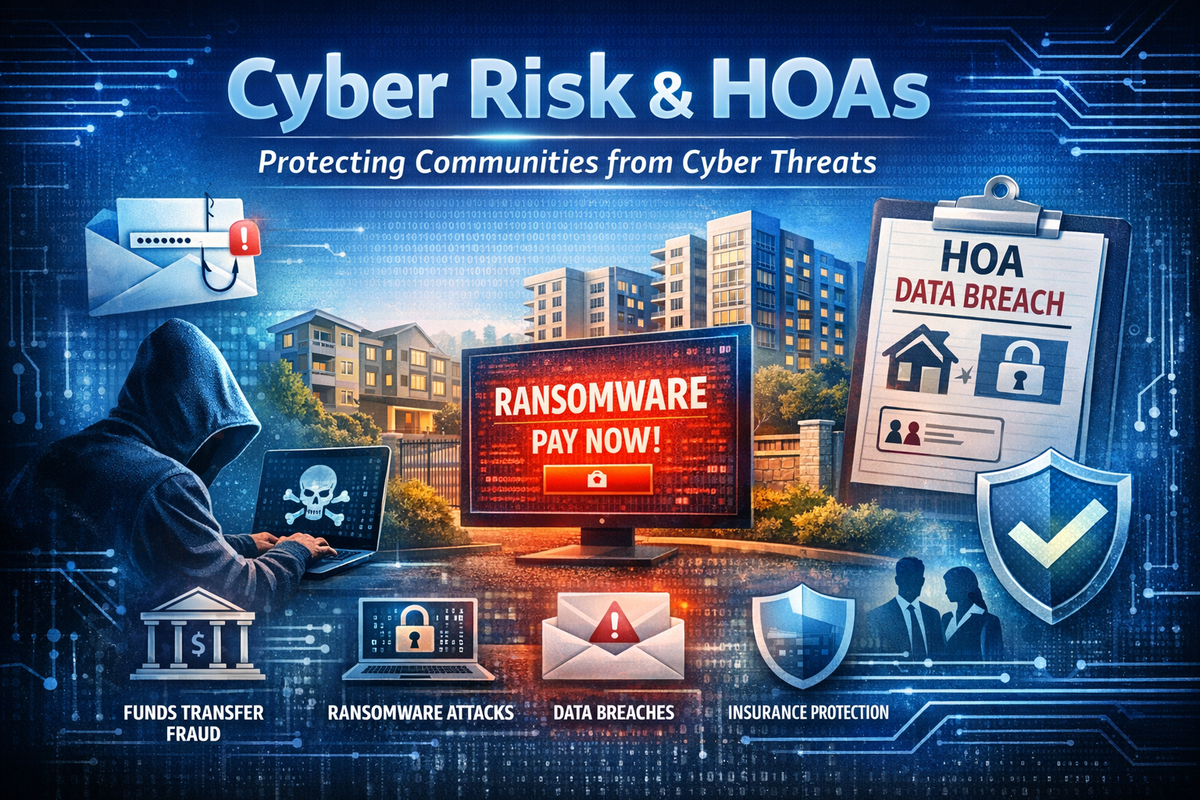
A common loss scenario: a property manager receives an email that appears to be from a board member, requesting an urgent wire transfer to a “new vendor.” Funds are wired. The email was fraudulent. The money is gone. In large HOAs, this can easily mean six-figure losses.
2. Ransomware
Hackers encrypt association records and demand payment to access them. Without backups and incident response protocols, operations can grind to a halt — assessment, billing, vendor payments, and access control systems.
3. Data Breach Liability
If resident data is compromised, the HOA may face:
- Notification costs
- Credit monitoring expenses
- Regulatory fines
- Potential lawsuits
4. Vendor & Property Manager Exposure
Many HOAs outsource management. But outsourcing does not transfer liability entirely. If the association owns the data, the association can still be named in a claim.
The Financial Impact on an HOA
Cyber losses are often misunderstood because they don’t “burn down a building.” But they can:
- Drain reserve funds
- Trigger special assessments
- Create internal conflict within the community.
- Damage trust in the board
- Increase D&O exposure
In high-value communities — especially in the Bay Area, where many HOAs manage multimillion-dollar assets — even a modest cyber event can quickly become a seven-figure problem when legal, forensic, and reputational costs are factored in.
How Cyber Insurance Protects HOAs
A well-structured cyber policy for an HOA typically includes:
✔ First-Party Coverage
- Incident response & forensic investigation
- Data restoration
- Ransomware payments (where legally permitted)
- Business interruption
✔ Funds Transfer Fraud / Social Engineering
Critical for HOAs handling large vendor payments.
✔ Third-Party Liability
- Privacy lawsuits
- Regulatory defense and penalties
- Media liability
✔ Breach Response Services
Many carriers provide immediate access to:
- Breach counsel
- IT forensic firms
- Crisis communication specialists
For a board, this means you’re not scrambling to assemble experts after a breach — the team is pre-built into the policy.
Why a Good Broker Matters
Not all cyber policies are created equal — especially for HOAs.Here’s where expertise makes the difference:
1. Understanding HOA-Specific Operations
A broker experienced in HOA and real estate risk understands:
- The relationship between the HOA and the property manager
- Where contractual risk transfer may fail
- How D&O and cyber policies interplay
2. Negotiating Social Engineering Coverage
Many policies sublimit funds transfer fraud — sometimes severely. A knowledgeable broker negotiates:
- Higher sublimits
- Favorable wording
- Fewer restrictive conditions
3. Coordinating With D&O Coverage
Cyber claims frequently evolve into board governance claims. An integrated strategy ensures no gaps between cyber and D&O.
4. Pre-Loss Risk Mitigation
The right broker doesn’t just place coverage. They:
- Review internal payment controls.
- Evaluate multi-factor authentication implementation.
- Help boards understand incident response planning.
Insurance should be part of a broader risk management strategy — not a band-aid after the fact.
Practical Steps HOAs Should Take Today
Even before placing coverage:
- Require dual authorization for wire transfers.
- Implement multi-factor authentication for financial systems.
- Confirm vendor payment changes verbally.
- Maintain offline backups
- Review management agreements for indemnification language
These controls not only reduce risk — they often improve underwriting outcomes and pricing.
Final Thought: Cyber Is Now a Core HOA Risk
Cyber risk is no longer a “tech issue.” It’s a governance issue, a financial stability issue, and increasingly a reputational issue. For HOA boards — particularly those overseeing high-value assets in complex urban markets — the combination of strong internal controls, properly structured cyber insurance, and experienced brokerage guidance is essential. The goal isn’t just to survive a cyber event. It’s to protect the community's financial integrity and the trust residents place in their board.