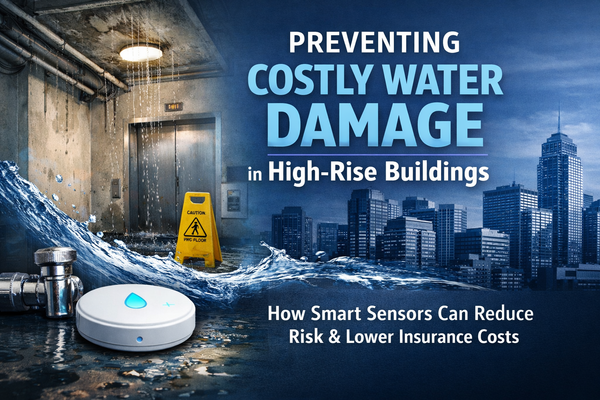
2026 Property Insurance Market Outlook for Commercial Real Estate Owners

A Combined Analysis of RPS and Amwins Market Reports
After several years of volatility, the commercial property insurance market is entering 2026 with a rare combination of expanded capacity, increased competition, and softening rates. Insights from two major wholesalers — Risk Placement Services (RPS) and Amwins — show a clear trend: while casualty lines remain challenging, property insurance is experiencing the most meaningful softening since before the pandemic-era challenging market began.
For commercial real estate (CRE) owners, HOA boards, apartment operators, and asset managers, this environment presents both opportunity and risk.
1. The Property Market Is Softening — And CRE Owners Should Benefit
Across both RPS and Amwins reports, property insurance is consistently highlighted as one of the strongest-performing lines heading into 2026.
Rate Relief
- RPS: Cat-exposed properties saw 15%–20% rate decreases in 2025; some accounts experienced 20%–27.5% total reductions throughout the year.
- Amwins: 2025 renewals frequently came in 5%–10% lower, with additional rate softening expected in early 2026.
What’s Driving the Softening?
- New capital entering the E&S market
- Carriers are deploying larger limits and competing for business.
- Lower-than-expected catastrophe volatility in 2025
- Improved underwriting profitability, enabling markets to re-engage in more challenging classes
This shift is especially beneficial for CRE portfolios heavily impacted during the challenging market — multifamily, condos/HOAs, high-rises, industrial/warehouse, and catastrophe-exposed assets.
2. Expect Better Terms, Larger Limits & More Flexible Program Structures
Soft markets don’t just reduce premiums — they expand what carriers are willing to offer.
Broader Terms Returning
- RPS confirms carriers are restoring coverages that were stripped out in 2022–2023.
- Blanket limits, more generous COPE flexibility, and lower deductibles are once again available.
Increased Carrier Capacity
- Amwins highlights larger limit deployment, often $10M+ per insurer, which makes layered towers smoother and more efficient to build.
- Lower attachment points are becoming more accessible, strengthening purchasing power for mid- to large-scale CRE portfolios.
CRE Implication
Use this market window to rebuild breadth of coverage, not just capture premium savings.
For large schedules or high-value urban assets, this is the ideal time to:
- Lower per-occurrence or catastrophe deductibles
- Purchase an additional limit to reflect inflationary replacement costs
- Reconstruct layered or shared programs for greater cost efficiency
3. Replacement-Cost Valuation Discipline Still Matters
Despite improved pricing, underwriters remain strict on valuation accuracy.
Both RPS and Amwins emphasize:
- Construction and rebuild inflation remain elevated.
- Carriers will penalize under-valued properties with higher deductibles, restricted limits, or fewer market options.
- Accurate COPE data and updated appraisals are rewarded with better pricing and broader coverage.
What CRE Owners Should Do
- Refresh replacement-cost valuations (RPS highlights this as a top priority).
- Document updates, renovations, and maintenance work clearly.
- Avoid using outdated square-foot rebuild estimates — they are no longer credible in underwriting models.
4. Key CRE Asset Classes Seeing the Biggest Benefits
Multifamily / Habitational
- RPS reports that clients with clean loss histories received material rate relief in 2025.
- Even some accounts with dated claims saw flat or modestly reduced pricing.
Wood-Frame Construction
- RPS highlights dramatic improvements: some projects are now pricing below $0.40 rate, versus $0.70+ during the challenging market.
Industrial, Logistics, and Specialty Commercial
- Improved appetite from property insurers is creating increased competition and favorable terms.
Urban High-Rise / Large Schedules
- Larger carrier limits and lower attachment points allow owners to build more efficient towers and reduce blended rate-on-line expenses.
5. But Soft Markets Can Change Quickly — CRE Owners Should Stay Alert
Even in a favorable property environment:
- Large catastrophes (wildfires, hurricanes, quakes) could quickly tighten capacity.
- Carriers will not price below technical minimums — the floor is real.
- Accounts with aging infrastructure or poor loss history will not receive the same relief.
Potential CRE Pain Points
- Older electrical systems or outdated fire protection
- Properties in wildfire or coastal-wind zones
- High-rise buildings lacking modern CAT modeling
- HOAs with weak financials or deferred maintenance
6. What CRE Owners Should Do in 2026 (Practical Playbook)
✅ 1. Strengthen your insurance program while prices are favorable.
Use savings to:
- Increase limits
- Decrease deductibles
- Restore coverage breadth
- Invest in valuations and engineering
✅ 2. Update property valuations immediately.
Accurate ITV = access to more markets and better pricing.
✅ 3. Take advantage of expanded E&S capacity.
More carriers are willing to participate, making prominent tower placements easier.
✅ 4. Refresh CAT modeling and loss-control reporting.
Especially important for urban high-rises, industrial portfolios, coastal assets, and wildfire-exposed sites.
✅ 5. For HOAs and apartments, document strong financials.
Underwriters reward stability, reserves, and precise maintenance planning.
✅ 6. Consider multi-year rate stability options where available.
With markets softening, you may be able to secure:
- 18–24 month policies
- Multi-year deductible agreements
- Extended rate guarantees
Conclusion: A Strategic Window for Commercial Real Estate Owners
For the first time in years, commercial real estate owners are operating in a buyer’s market for property insurance.
The combined insights from RPS and Amwins present a unified message:
Property insurance is softening.
Capacity is expanding.
Terms are broadening.
Competition is returning.
CRE owners who proactively update valuations, invest in risk management, and strategically reshape their programs can secure both lower costs and stronger long-term protection.
By Sarmad Naqvi, CLCS
Woodruff Sawyer